Building is one of the most expensive personal projects in South Africa; to reduce your building cost, it is important to build a strong, safe, and suitable foundation for your house without messing up your budget. In this article, we will discuss the best low-cost foundation types in South Africa for either a backyard room, starter home, or affordable housing project.
Importance Of Foundation
A foundation is vital for holding the building’s weight to the ground to avoid cracking and sagging and prevent it from collapsing. Your foundation must be strong and suitable for the kind of soil in your area, whether sand or clay. A foundation is the base of your entire structure, and as important as it is, it doesn’t have to break your bank. You can build an affordable, legally safe structure with proper planning and choice.
Strip Foundations: Cheap and Widely Used
This foundation is the most cost-effective and most popular in South African homes. Strip foundations work better in lightweight structures such as backyard rooms and single-story houses.
How Does It Work?:
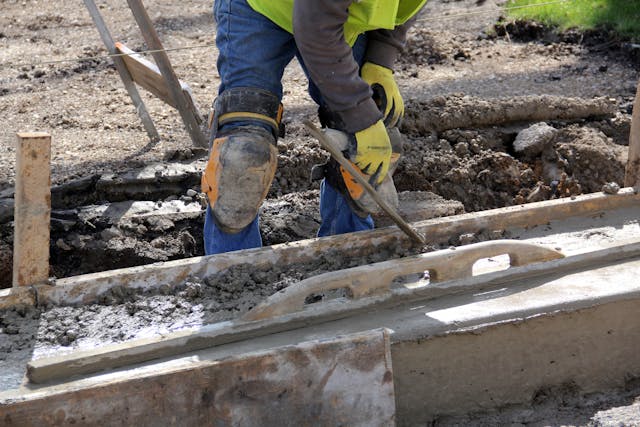
Excavate a 600–900 mm deep trench under all load-bearing walls and fill it with concrete. Commence the brickwork directly on top.
Works Suitably In:
- Sandy or gravel soils, i.e., stable soil
- Garden apartments or single-story buildings
- Locations with an effective drainage
Advantages of Strip Structures:
- Cost-effective and easily built
- Does not need a lot of concrete compared to raft slabs
- Effective on small to medium buildings
Disadvantages:
- Does not work well on unstable soils like clay soil
- Can risk displacement under poor drainage
2025 Estimated Prices: Range between R1,500 and R2,200 per linear metre
Raft Foundations: Suitable For Expansive Clay Soil
Slab-on-grade foundations work best in locations with expansive clay soils in South Africa. They consist of flat, reinforced concrete slabs that hold the whole structure together.
Work Suitably In:
- Unstable/poor soil
- Affordable housing constructions
- Uniformly distributed weight on spacious floors
Advantages of Raft Foundations:
- The weight is evenly distributed across the whole ground floor
- Guaranteed strong resistance to soil displacement
- Raft foundations have excellent thermal mass that helps with indoor temperature regulation
Disadvantages:
- You need to buy more concrete and steel compared to strip foundations
- More expenditure, as there might be a need for extra insulation or damp-proofing
2025 Estimated Price:Prices range between R2,200 and R3,500 per square meter.
Pad and Pier Foundations: Suitable for Uneven Ground
Pad and pier foundations are usually used when building timber houses, Wendy houses, and light steel frame structures. This technique requires positioning individual concrete pads or piers at certain crucial points (corners and load-bearing walls). beneath the structure.
Suitable for:
- Inclined or uneven land
- Low-cost timber houses or modular houses
- Semi-permanent/temporary buildings
Advantages of Building with Pad and Pier Foundations:
- Cheap material prices
- Limited digging required
- Easy maintenance and inspection
Disadvantages:
- Not recommended for structures with heavy bricks
- Poor anchoring may lead to wind uplift
- Cross-bracing may be needed
2025 Estimated Prices : Between R800 and R1,800 per pad/pier
Gravel and Lime Stabilized Foundations – Rural & Eco-Friendly
This is the low-cost method of foundation used on temporary and low-rise structures mainly in some rural areas of South Africa.
Suitable For:
- Areas with restricted access to concrete
- Mud-brick or adobe structures
- Environmentally friendly homes
Advantages of Using Gravel and Lime-Stabilized Foundation:
- Very affordable
- Locally sourced materials
- Environmentally friendly
Disadvantages:
- The structural strength is limited
- Many municipalities do not approve it for long-term residential use
- Needs to be maintained regularly
2025 Estimated Price: Between R150 and R500 per square metre
Foundation Types Comparison
| Type of Foundation | Suitable On | Estimated Price for 2025 | Suitable Soil |
| Strip Foundation | Low-cost structure, stable soil | R1,500 – R2,200/m | Sand and gravel |
| Raft Foundation | Clay soil, stable housing structure | R2,200 – R3,500/m² | Clay, unstable soil |
| Pad & Pier | Timber, sloped ground | R800 – R1,800/pad | Unstable or rocky ground |
| Gravel/Lime | Rural, eco-friendly structures | R150 – R500/m² | Dry, compact soil |
Important Factors To Consider When Choosing a Low-Cost Foundation
- It is essential to always do a soil test before construction. The geotechnical report will help you choose the right foundation for the soil on your site.
- Choose the type of structure according to the materials you will use; timber, steel, or brick will vary in way of load-bearing support.
- When deciding the budget, also consider long-term maintenance and decide on long-lasting materials.
- In terms of permanent structures, get building approval from your local municipality.
Is It Possible to Build Without a Foundation?
You may not need a foundation when building a temporary or movable structure, but you still need:
- A uniform, even base
- Correct anchoring
- There may be a need for municipal approval if used domestically or for sleeping
Consult with the local council before building any structure, whether temporary, small, or big.
Key Tips to Save Money on Your Foundation
- Employ a skilled builder who is familiar with the regional soil types
- Have various supplier quotations and choose the best
- Plan for a sufficient water drainage to avoid expensive maintenance
- Choose for simple functional engineering for easy maintenance
- Check if you qualify for subsidies like FLISP
Conclusion
We all know how expensive foundation is, but with the right planning and choice of materials that are suitable for your soil type, you can build an affordable, safe, and durable home or backyard room. These low-cost foundation types are suitable for building a safe, affordable foundation in both rural and urban areas. The best foundation does not always have to be the cheapest; you should consider a foundation that will last longer and avoid expensive maintenance in the future.